
Overview
How to develop or improve upon a s company verification and validatioin, including, DQ, IQ, OQ, and PQs, or equivalents that meet U.S. FDA CGMP, ICH Q-series, and ISO 13485 requirements; based on product use hazard analysis per ISO 14971:2019 and ICH Q9. Facilities, equipment, process, test methods,software, and the QMS will be addressed.
FDA Warning Letters and recent high-profile recalls indicate major cGMP deficiencies in many companies. One major failing a lack of or insufficient or targeted risk-based company-wide V&V systems and execution. Starting with a Master Validation Plan, evaluating its elements against ISO 14971 or Q9 hazard analysis / risk management, allows development of meaningful product validations. The roles of different V&V protocols. How to employ equipment / process DQs, IQs, OQs, and PQs, or their equivalents per ASTM E2500, against a background of limited company resources (personnel, budget, time). A matrix simplifies “as-product”, “in-product”, process, and equipment, et al, software V&VT, assuring key FDA requirements are not overlooked. Risk Management, the QMS, cybersecurity, ML/AI, and 21 CFR Part 11 will be considered.
Why Should You Attend
Verification and validation requirements for facilities, equipment, processes, QMS, hardware and software, have always been part of the US FDA’s GMPs. However, with increasing technology, both industry and regulatory agencies expectations have increased. Recent high-profile field problems indicate that V&V activities are not planned or carried out as completely as expected, and may not be fully utilizing the power of current risk management tools, as identified in ISO 14971 (ISO 14971 will have increased emphasis under the new FDA changes to the Device QSR / QMSR). Cybersecurity has become a major issue. The FDA / ICH Q-series provide valuable insights for all regulated industries, not just pharma. The billions of dollars spent by industry annually for V&V are not providing the product safety or efficacy seemingly promised. For most companies, the fixes are not rocket-science, but proper up-front V&V planning and execution.
Webinar Takeaway
- Verification or Validation -- Recent regulatory expectations
- The Master Validation Plan / structure
Product Validation – how it differs from process / equipment V&V - Process / Equipment / Facility Validation -- FDA's guidance
- "Requirments" - the Start of V&V
- When and How to use DQ, IQ, OQ, PQ, or their equivalents
- How to use Product Risk Management Tools (per ISO 14971 and ICH Q9)
- The 10 key documents for software validation; Cybersecurity
- Incorporating 21 CFR Part 11 requirements
- Suggested various “test case” formats
Who Will Benefit
- Senior management in Drugs, Devices, Biologics, Dietary Supplements
- QA
- RA
- R&D
- Engineering
- Production
- Operations
- Consultants; others tasked with product, process, software ... validation responsibilities
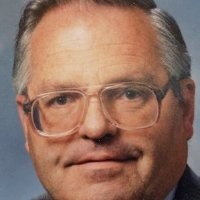
Faculty John E. Lincoln
Principal of J. E. Lincoln and Associates LLC
John E. Lincoln is an internationally recognized FDA regulatory compliance, medical device quality systems, and validation expert with more than 40 years of experience in the life sciences industry. He specializes in FDA QMSR, ISO 13485, Design Controls, Software Validation, Process Validation, Risk Management (ISO 14971), 21 CFR Part 11, Data Integrity, and Medical Device Cybersecurity. John has trained thousands of professionals worldwide and is a respected author and conference speaker, helping pharmaceutical, biotechnology, and medical device organizations achieve regulatory compliance, improve product quality, and prepare for successful FDA inspections.